
Tackling Global Challenges Through Business: Japan SDGs Innovation Challenge the 3rd year with UNDP and Japanese Companies
The United Nations Development Programme (UNDP), a founding partner of SHIP, operates UNDP Accelerator Labs (A-Labs) in 91 locations around the world. Working together with local governments, various organizations, and private companies, the A-Labs aim to create and implement innovative solutions to development challenges, contributing to the achievement of the SDGs.
To accelerate these efforts, each A-Lab actively collaborates with private-sector partners. Since 2020, by utilyzing funding from Japan’s Cabinet Office, Japanese companies have been working together with A-Labs to explore and test solutions that leverage Japanese technology and expertise. At the same time, the “Japan SDGs Innovation Challenge” project supports the development of Japanese business models, with SHIP assisting in its management.
This project is implemented in accordance with the innovation process defined in ISO 56002: Innovation Management System, published in 2019, with a focus on the “concept (solution) creation” and “concept (solution) validation” stages of the process (see the process diagram below).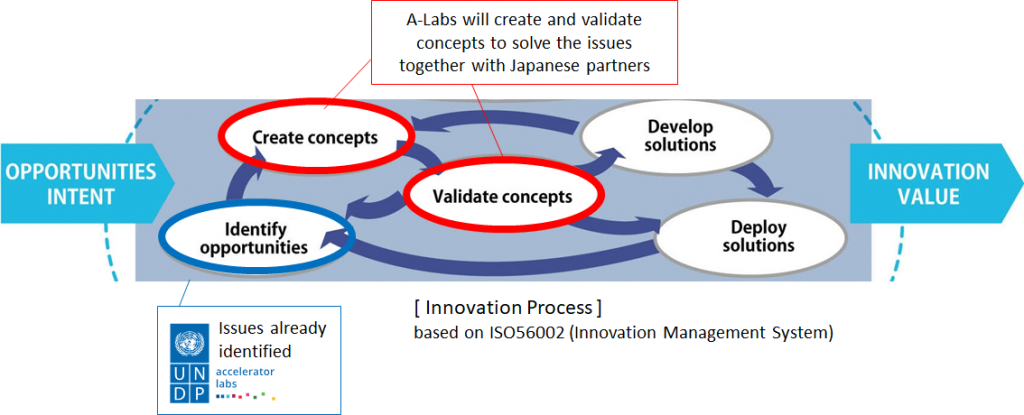
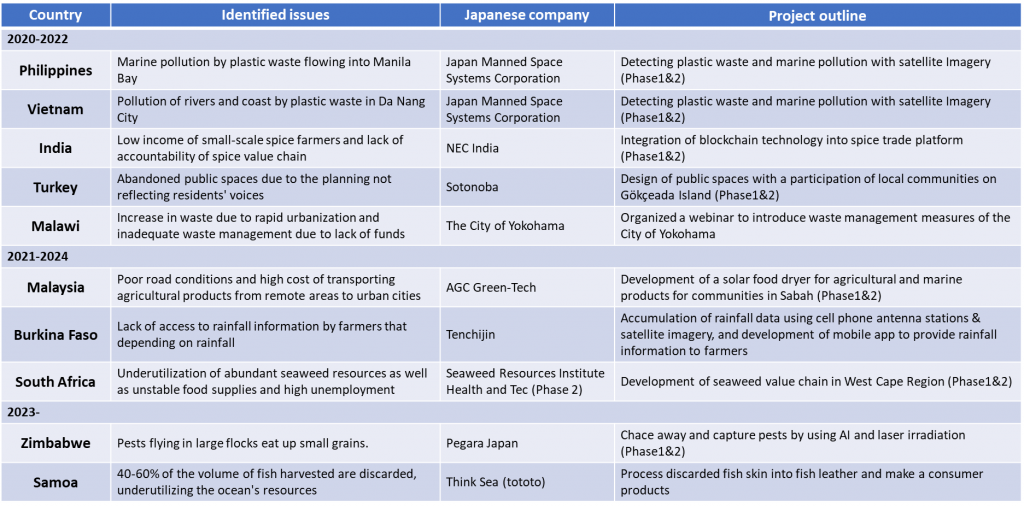
In 2020–2022, projects were carried out in the Philippines, Vietnam, India, Turkey, and Malawi, followed by projects in Malaysia, Burkina Faso, and South Africa. In the beginning of 2023, new projects were launched in Zimbabwe and Samoa, while the second phase of the project in Malaysia is also underway. (Learn more about projects in 2020-2022 here)
Projects under theJapan SDGs Innovation Challenge
Japan SDGs Innovation Challenge does not conclude its activities once the project period ends. Even after the project, Japanese companies continue to collaborate with UNDP A-Labs to implement and scale up solutions, while promoting the local commercialization of Japanese business models.
In the Philippines and Vietnam, where Japan Manned Space Systems Corporation (JAMSS) has been using satellite image analysis technology to identify hotspots with large amounts of plastic waste flowing into rivers and the sea, in the second phase of the project, the target areas and detection scope were expanded.
To help local stakeholders utilize the findings for waste management policies, an information dashboard was developed, allowing them to access detection results anytime via website or smartphone. JAMSS plans to expand the provision of this service across Southeast Asia.
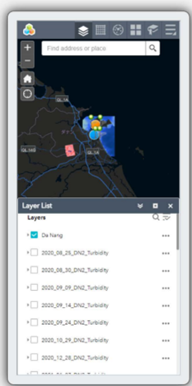
Dashboard view on a smartphone
Source) JAMSS
As a result of the project carried out by NEC India and A-Lab India over one and a half years, the Spices Board of the Ministry of Commerce and Industry released a new platform, “eSpiceBazaar”, in August 2022. The platform is equipped with NEC India’s blockchain technology, marking the start of its use for spice trading and traceability.
Following the outcomes of this project, NEC India plans to expand its blockchain-based services to other platforms in India.
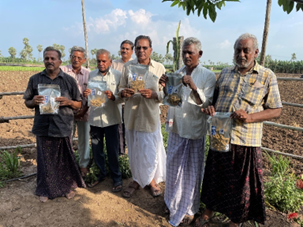
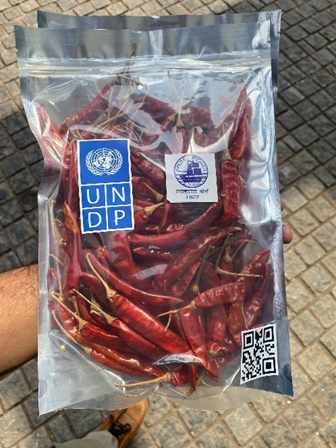
Farmers whoho participated in field testing Product with a QR code for traceability information
Source) A-Lab India
In Turkey, public spaces designed by Sotonoba in consultation with local residents were built by the residents themselves by 2022 and are now being actively used by the community. The placemaking methods and design expertise of Sotonoba’s public spaces have been introduced to municipalities and other organizations across Turkey by the A-Lab, and their expansion to other regions is expected.
Community Kitchen Built on Former School Site (Kahrat)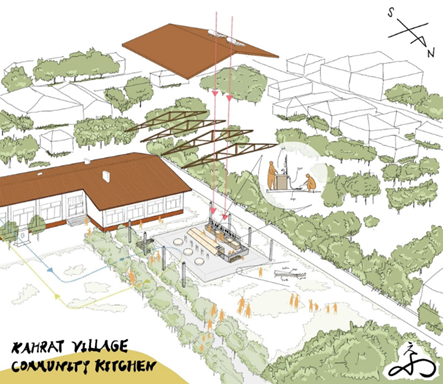
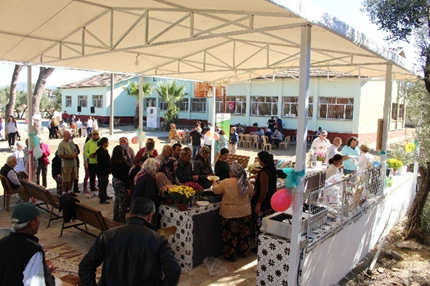
Design sketch and Opening event of the community kitchen (October 22, 2022)
Community Relaxation Space for Local Cats and Residents (Karşıyaka)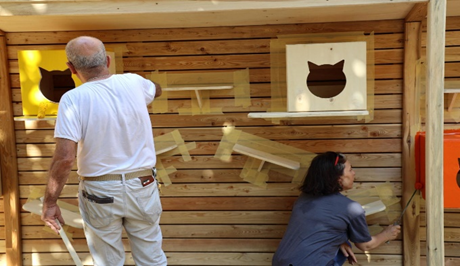
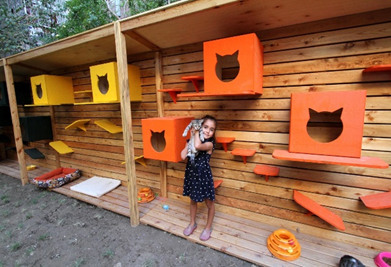
Construction and completed public space by community residents
Community Space for Residents to Enjoy Greenery (Karşıyaka)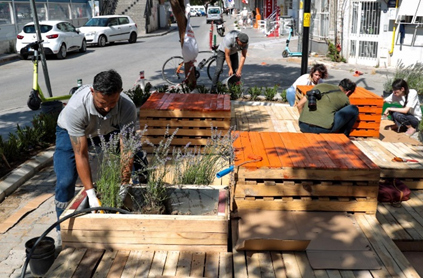
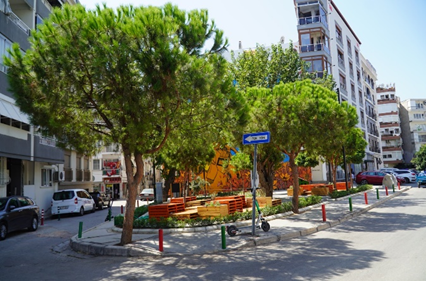
Public space built by community residents and the completed space
Source) UNDP Turkey
The project in Malaysia, launched in 2021, completed its first phase with the design and fabrication of a pilot solar-powered agricultural dryer using AGC Green-Tech’s fluoropolymer film, F-CLEAN®, as well as drying trials in two communities in Sabah. The project is now in its second phase, focusing on expanding the food dryer to other regions.
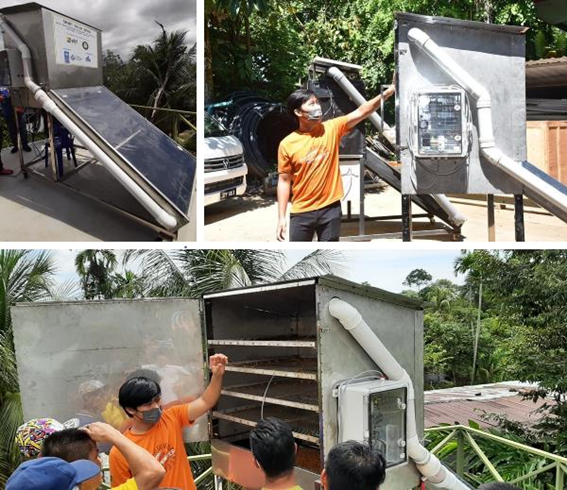
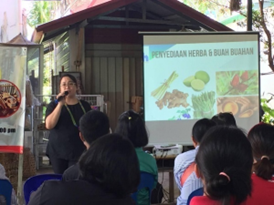
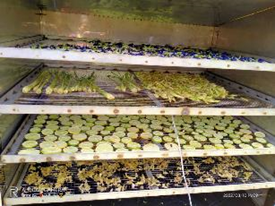
Food dryer demonstration for community members Drying trials of vegetables and fruits
Resource) A-Lab Malaysia
In Burkina Faso, Tenchijin has integrated ground-based rainfall measurements with its satellite data and AI technologies to enable more accurate rainfall monitoring and forecasting. This has made it possible to provide farmers—who have previously suffered crop losses due to flooding and other weather-related events—with rainfall information and forecasts through a web platform as well as via SMS on mobile phones.
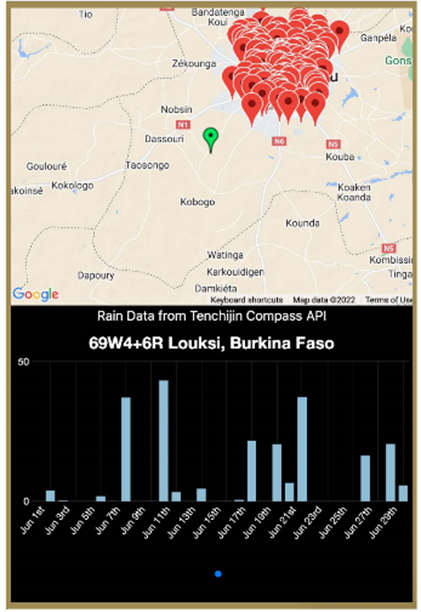
Web platform interface displayed on mobile phones
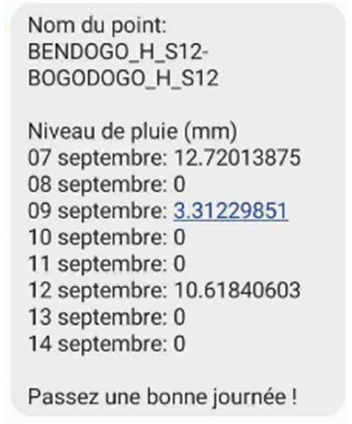
Rainfall information via SMS
Source) Tenchijin
In South Africa, starting in January 2022, Seaweed Resources Research Institute conducted surveys and analyses—including field studies—to identify coastal areas suitable for seaweed aquaculture and seaweed species appropriate for cultivation. Based on these findings, the project team examined the value chain for seaweed-based industries and decided to foster an industry in the Western Cape focused on cultivating Gracilaria seaweed for agar production, primarily for export to Japan. In the second phase, the project plans to conduct cultivation and processing trials for Gracilaria with the participation of local communities, aiming toward export.
The project in Zimbabwe, launched in January 2023, is developing AI-based bird control measures using Pegara Japan‘s technology to reduce damage caused by pest birds that fly into farmlands in large flocks and consume grain crops. The project is currently examining bird deterrent technologies to be combined with AI, and Pegara Japan plans to visit the site and conduct pilot demonstrations in the summer of 2023.
In Samoa, a project with Think Sea (brand: tototo)—which has technology to tan fish skins into fish leather for products such as wallets—was launched in February 2023 to make effective use of fish skins that are otherwise discarded. From June to July, the Think Sea team visited Samoa to assess the local availability and condition of fish skins and to share fish-skin tanning techniques with local communities.
Over the past three years, these projects—implemented across 10 countries through collaboration between Japanese companies and UNDP A-Lab—have worked to address development challenges in developing countries by leveraging Japanese technologies and expertise, while also supporting the development of sustainable business models for Japanese companies.
The initiative is now entering a consolidation phase. Going forward, the project outcomes and accumulated know-how will be compiled and shared within the A-Lab Global Network as the Japan SDGs Innovation Challenge model, with plans to expand the initiative through broader partnerships to advance the SDGs and support the commercialization of participating companies.
Share this article